
Lithium Battery Charging Room for Food Manufacturing Client
Case Study

Lithium Battery Charging Room for Food Manufacturing Client

Case Study

Lithium Battery Charging Room for Food Manufacturing Client


There is no one-size-fits-all solution for lithium charging. For this project proximity to an EPS wall drove the need for a fully fire-rated building. Other sites completing the same conversion were able to adopt simpler solutions within existing warehouse charging areas, using fire-resistant lining and flame detection with existing sprinklers. Engaging early with insurers and understanding site-specific risks is key to selecting the right, cost-effective approach.

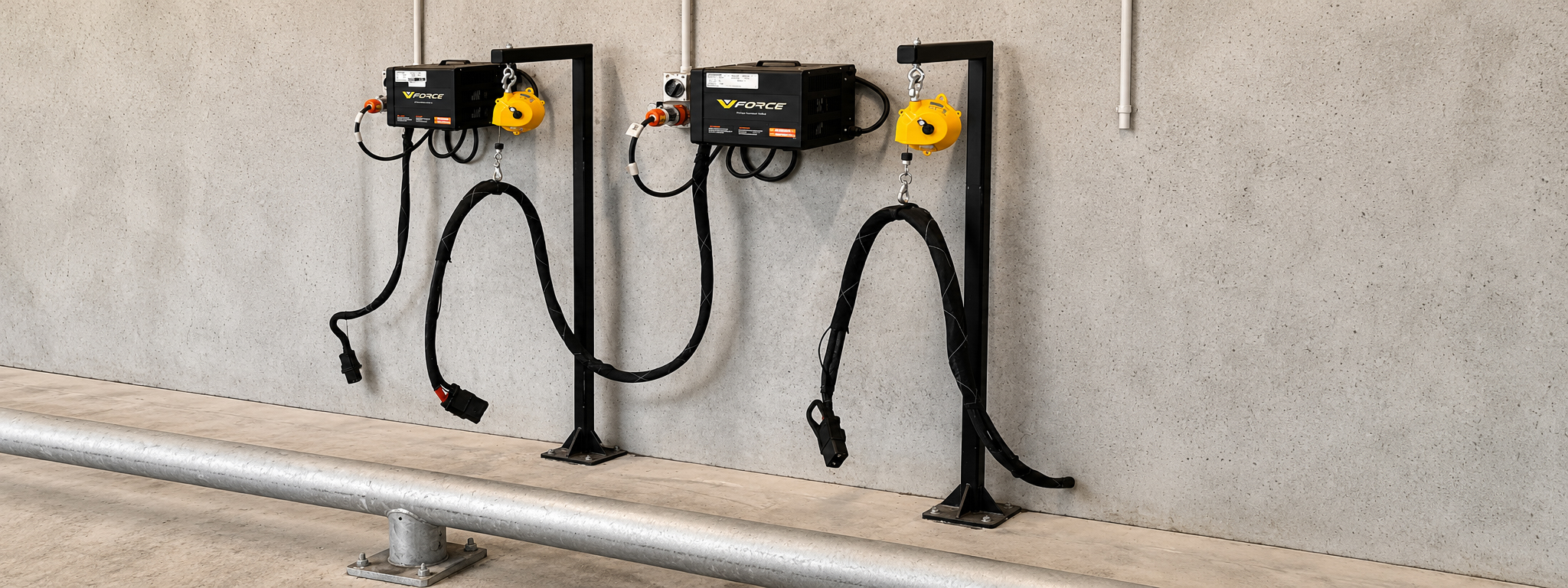
This client transitioned its forklift fleet at its Auckland site from lead-acid to lithium batteries. To support the change safely, the site needed a dedicated charging facility for its new Crown forklifts and freezer racking shuttles. TEG Projects managed the delivery of a new 120-minute fire-rated battery charging room, separating lithium charging from the existing factory,  on time and under budget.

WIRI lithium battery charging room TEG Projects

    Project Manager


    Graham Brooks

    Client Information


    The client is one of Australasia’s largest poultry producers, operating manufacturing and processing facilities across New Zealand and Australia. The Auckland site is a key production facility for the New Zealand operation.

    Goal


    This major food manufacturer was transitioning its material handling fleet from lead-acid to lithium-ion batteries across multiple sites. At one Auckland facility, the goal was to deliver a purpose-built, fire-rated charging facility for new Crown lithium forklifts and freezer racking shuttles, designed around insurer guidance, and built without disrupting site operations or existing forklift charging during construction.

    Why TEG Projects


    TEG Projects provided client-side project management from scoping and design coordination through to construction delivery. This included preparing the scope of works and tender documentation, coordinating the architectural and structural design with Stiles + Hooker, and managing the build process to maintain operational continuity throughout. TEG ensured the facility was fully documented, including PS1, PS3 and PS4 producer statements, even though the building was under 30m² and did not require building consent.

    Solution


    TEG managed the project from initial scoping through to completion. A temporary shrink-wrapped scaffold charging structure was constructed first so forklift charging could continue uninterrupted during the build. 

    The completed facility features tilt-slab precast concrete construction designed to achieve a 120-minute fire-resistance rating across the walls and ceiling, providing two-hour fire separation from the adjoining factory. Sprinkler protection with high-flow heads and Ampac heat and flame detection are installed throughout, supported by a dedicated power supply on a shunt trip that automatically isolates power if a fire is detected. An external emergency stop allows power isolation from outside the room, while a FirePro fire suppression unit is housed within the local electrical panel. Fire stopping has been applied to all penetrations.

    Challenges


    Lithium-ion batteries are increasingly replacing lead-acid in material handling equipment, but the standards governing how they should be charged have not kept pace with the technology. 

    The site itself added further complexity. The new charging room was located just one metre from an existing factory wall built with EPS panels, requiring the full two-hour fire rating. A large council stormwater drain ran close by, placing the new room within its zone of influence. On top of this, the new building replaced an existing structure that housed the current forklift charging, meaning charging had to continue throughout construction without disrupting site operations.

    Results


    The client now has a purpose-built, fire-separated charging facility supporting its lithium-powered forklift and shuttle fleet, with layered fire detection, suppression, and emergency isolation designed around insurer guidance. The building was completed on time and under budget. 


    Frequently Asked Questions