

< News
July 13, 2026
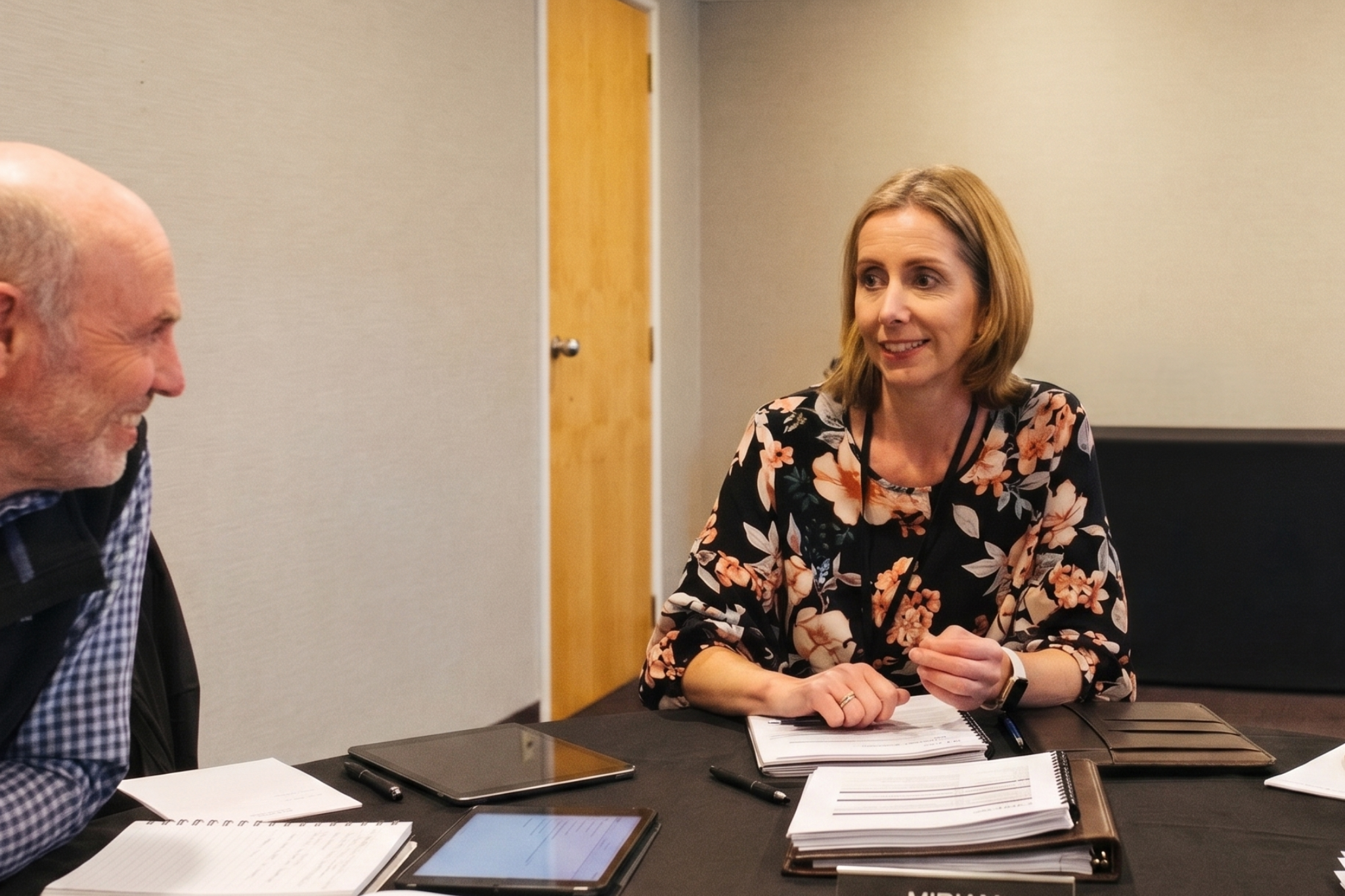
Miriam Mills is the Auckland Regional Manager at TEG Projects and has been with the business for more than seven years. She currently manages our largest team of project managers and, throughout her career as a Capital Projects and Programme Manager, has led and mentored dozens more. In this month’s blog, Miriam shares her perspective on one of the most common questions she is asked: what separates a good Project Manager from a Senior Project Manager?
At first glance, the difference between a Project Manager (PM) and a Senior Project Manager (SPM) might seem straightforward. But it’s not about larger projects, bigger budgets, or more years of experience.
While those things often come with seniority, they are not what truly differentiate the two roles. In my experience, the transition from PM to SPM is less about technical capability and more about leadership, judgement, communication, and influence – and once you’ve made that shift, you tend to see it in everything from how someone runs a meeting to how they handle a client who’s just changed their mind for the third time.
The Shift from Managing Projects to Leading Outcomes
A Project Manager is often focused on delivering defined outcomes. They coordinate stakeholders, manage budgets and schedules, identify risks, and solve problems as they arise.
A Senior Project Manager does all of that too, but their focus expands beyond the immediate project. They’re constantly asking what risks haven’t surfaced yet, which stakeholders might become obstacles later, and where the assumptions in a plan are hiding. That forward-looking lens – thinking two steps past the current milestone – is really what separates the two roles.
Senior Project Managers are also comfortable operating in ambiguity and can make progress even when information is incomplete. One of their hallmarks is knowing where to focus their attention – quickly telling which issues need deep personal involvement and which are best delegated to subject matter experts. Rather than getting consumed by every detail, they hold the bigger picture: risks are managed, decisions get made, and the project keeps moving. They know enough to ask the right questions, while trusting their team to supply the technical answers.
Communication Becomes a Critical Skill
One of the strongest indicators that someone is ready for an SPM role is their ability to communicate effectively at every level of an organisation.
Project Managers often communicate well with operational teams, contractors, and project stakeholders. Senior Project Managers also need to engage confidently with sponsors, directors, governance groups, and senior leadership – explaining complex situations clearly, influencing decisions, navigating difficult conversations, and building trust across very different audiences.
This isn’t about being the loudest person in the room. It’s about understanding your audience, adapting your message, and creating alignment around a shared outcome. The most effective Senior Project Managers I’ve worked with are the ones who can take an incredibly complex problem and explain it so that everyone in the room – technical or not – walks away understanding it the same way.
Why Soft Skills Matter More Than People Expect
As an engineer by background, I’ve always believed technical capability is the foundation of good project delivery. But as project managers progress, the differentiating factors become less about technical knowledge and increasingly about communication, influence, judgement, and leadership – the same qualities I’ve described above, just applied at a bigger scale and with higher stakes.
At TEG Projects, our competency framework reflects that. We assess and develop capabilities like leading with influence, relationship building, negotiation, critical thinking, risk management, planning, adaptability, and resilience, and these become more important the more senior someone gets.
This was a key theme at our recent TEG Team Development Day, where the team worked through real-world scenarios focused on stakeholder management, communication, influence, professional judgement, and navigating tricky situations. The discussions reinforced something I’ve come to believe strongly: successful project management is more about people than process.
How Promotion to Senior Project Manager Works at TEG
Within TEG Projects, promotion isn’t based solely on tenure, years of experience, or project size. We have clearly defined competency frameworks for Project Engineers, Project Managers, and Senior Project Managers. Team members assess themselves against these competencies and work closely with their Regional Manager to identify strengths, capability gaps, and development opportunities, then build a professional development plan targeted at the next stage of their career.
Promotion is earned by consistently demonstrating SPM-level competencies in practice – proactive risk management, strong stakeholder engagement, sound judgement, and the ability to operate successfully in complex, ambiguous environments.
Over the past few years, I’ve had the privilege of supporting several of my team members through this journey, including Murray Irvine, Smruthi Vishwanath, and Brandon Tai. Each showed these capabilities in their own way, but all shared an ability to influence outcomes, build trust with clients, and lead through uncertainty. Watching people develop these skills and progress their careers is one of the most rewarding parts of leadership.
Final Thoughts
When clients engage a Senior Project Manager, they’re not simply paying for extra years of experience. They’re engaging someone who can navigate uncertainty, make sound decisions under pressure, build alignment across complex stakeholder groups, and provide leadership when the path forward isn’t obvious – someone who knows when to lead from the front, when to delegate, and when to simplify complexity.
In many ways, the difference between a PM and an SPM comes down to one thing:A Project Manager successfully manages projects. A Senior Project Manager successfully leads people, decisions, and outcomes.
Frequently Asked Questions
What is the main difference between a Project Manager and a Senior Project Manager?
The primary difference isn’t technical capability – it’s leadership, communication, influence, judgement, and risk management, particularly in complex or ambiguous environments.
Is a Senior Project Manager just a more experienced Project Manager?
Not necessarily. Experience helps, but promotion isn’t simply a factor of time served. It comes down to demonstrated capability across leadership, stakeholder management, and decision-making under pressure.
How long does the transition from PM to SPM typically take?
There’s no fixed timeline at TEG – it depends on the opportunities someone has had to lead through ambiguity and build stakeholder trust, not just years in the role. Some people are ready in a few years; others take longer, and that’s not a reflection of their ceiling, just their path.
What’s a common blind spot for PMs aiming for an SPM role?
Many strong PMs assume the next step is simply “more of the same, but bigger” – larger budgets, bigger teams. In reality, the shift is qualitative, not just quantitative: it’s about developing judgement and influence, which often means deliberately stepping back from hands-on delivery to focus on the bigger picture.
Do Senior Project Managers need to be technical experts?
Technical competence still matters, especially in engineering and manufacturing environments. But progression from PM to SPM is driven more by leadership and interpersonal capability than technical depth alone.
How does TEG Projects assess readiness for promotion?
We use a competency-based framework covering Project Engineers, Project Managers, and Senior Project Managers. Employees assess themselves against it and work with their manager to build a targeted development plan.
Can someone become a Senior Project Manager simply by managing larger projects?
Not on its own. Bigger, more complex projects can build valuable experience, but promotion ultimately depends on demonstrating the leadership behaviours and judgement expected at SPM level.
What advice would you give to aspiring Senior Project Managers?
Develop your soft skills as deliberately as your technical ones. Learn to communicate clearly, build trust, influence stakeholders, manage risk before it becomes a problem, and get comfortable operating where the answer isn’t immediately obvious. These are usually what accelerates the move from PM to SPM.