

< News
June 24, 2026
At TEG, ongoing professional development is a core part of how we operate. Our team days are one of the most deliberate investments we make in that development, bringing the full team together in person to work through real challenges, share experience across projects, and sharpen the collective thinking that underpins how we deliver for clients.
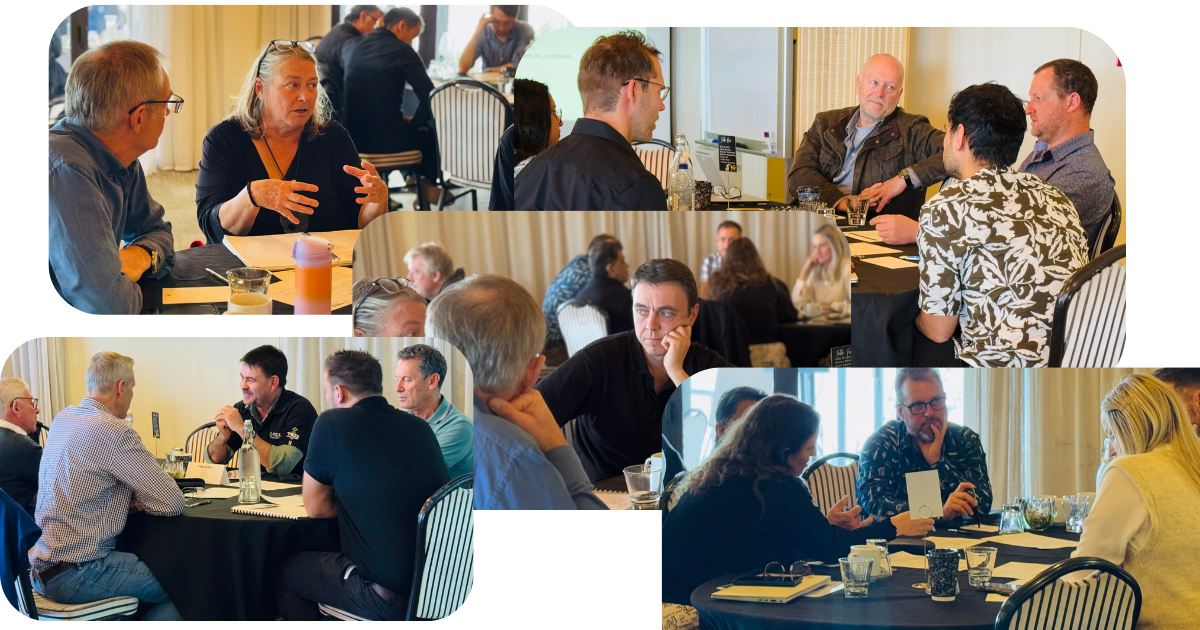
At our most recent team day, we dedicated the morning to a structured group discussion programme built around scenarios that reflect the genuine complexity of project management work. These were drawn from the kinds of situations our people encounter regularly, and the discussions they prompted were exactly the kind of frank, experience-led conversations that formal training rarely produces.
The scenarios were organised across five themes: stakeholder and relationship management, communication and influence, client behaviour and change resistance, team dynamics and internal challenges, and professional judgement and boundaries. Each one presented a specific situation and a set of questions designed to surface practical approaches, identify common failure modes, and draw out the places where different experience and personality lead to genuinely different conclusions.
Some of the most valuable discussions came from scenarios around stakeholder management. How do you surface resistance from a stakeholder who is agreeable in meetings but working against the project behind the scenes? How do you maintain momentum when a steering group is full of opinions but no one will own a decision? How do you re-engage a sponsor who was present at initiation but has since gone quiet? These are situations that every experienced project manager has faced, and the range of approaches that came out of the discussion reflected just how much context, relationship history, and individual judgment shape the right response.
The communication and influence scenarios prompted some of the richest discussion of the morning. At the heart of many of these scenarios is a shared goal: helping clients achieve the outcomes they are investing in, even when the path to get there involves difficult conversations or careful navigation of competing priorities. The team explored how to communicate clearly under pressure, how to maintain momentum when decisions are complex, and how to provide the kind of honest, expert guidance that clients rely on TEG to deliver. These are the conversations that build long-term trust.
A consistent theme across the morning was the relationship between individual strengths and professional effectiveness. Understanding how your natural approach shapes the way you read a room, communicate under pressure, or respond when a project starts showing early warning signs is an important part of continuing to grow as a practitioner. The Clifton Strengths framework, which the team explored on Day 1 of our team days and as part of a broader development programme, provided a useful lens for those conversations. They’re not as a definitive explanation of behaviour, but as a prompt for honest reflection.
The afternoon session turned to the TEG Project Management System, which covers the governance framework, templates, and processes that underpin how we run projects from pre-CAPEX through to closure. While this is not the most immediately engaging material, the investment of time is worthwhile because the system exists for a very practical reason. When our people are working across multiple clients and project types, a consistent and well-understood approach to governance, documentation, and risk management is what ensures quality and protects our clients. Good systems reduce the likelihood of things falling through the cracks, create clarity around roles and accountability, and give clients confidence that their project is being managed with rigour. The team worked through the key templates, discussed which tools they use most regularly in practice, and identified where there are opportunities to embed the system more consistently across the business.
Team days like this are a reflection of TEG’s commitment to building a team that is not only technically capable, but professionally sharp. The quality of discussion that happens when experienced people sit in a room and work through hard problems together is something that cannot be replicated through online training or written resources alone. It is one of the reasons our people continue to grow, and one of the reasons our clients trust us to deliver.